In this article
The Conway Housing Authority spent federal grant money making 47 buildings meaningfully safer. The insurers who cover those buildings have not promised anything in return.
That’s the short version. Here’s why it matters if you’re thinking about relocating to a smaller American city - particularly one where affordable housing stock is old, the weather is getting worse, and you’re trying to figure out whether the place you’re moving into will still be there, in livable condition, in five years.
What Actually Happened in Conway
The Family Site is a public housing development near the University of Central Arkansas in Conway - 91 rent-restricted homes spread across 47 duplex-style buildings on tree-lined residential blocks. By 2025, the development was roughly fifty years old, and its roofs had aged unevenly. Decades of building-by-building repairs meant each roof had its own timeline of wear and patch jobs. Replacing them all at once was not something the housing authority could afford.
Without outside funding, CHA’s executive director Jackie Otto says the plan was straightforward and grim: hire an architect to identify the worst roofs, replace those first, and work through the rest as money allowed. “We were going to tackle the worst roofs first,” she says. “We were just going to kind of piecemeal it.”
A federal grant changed the math. CHA received $518,037 through the Federal Home Loan Bank of Dallas’s FORTIFIED Fund Rental Program - part of nearly $8.7 million awarded to ten public housing authorities across Arkansas, Louisiana, Mississippi, and Texas. The 2025 round of funding put storm-resistant roofs on 2,184 units across the region. The bank has made another $10 million available for 2026.
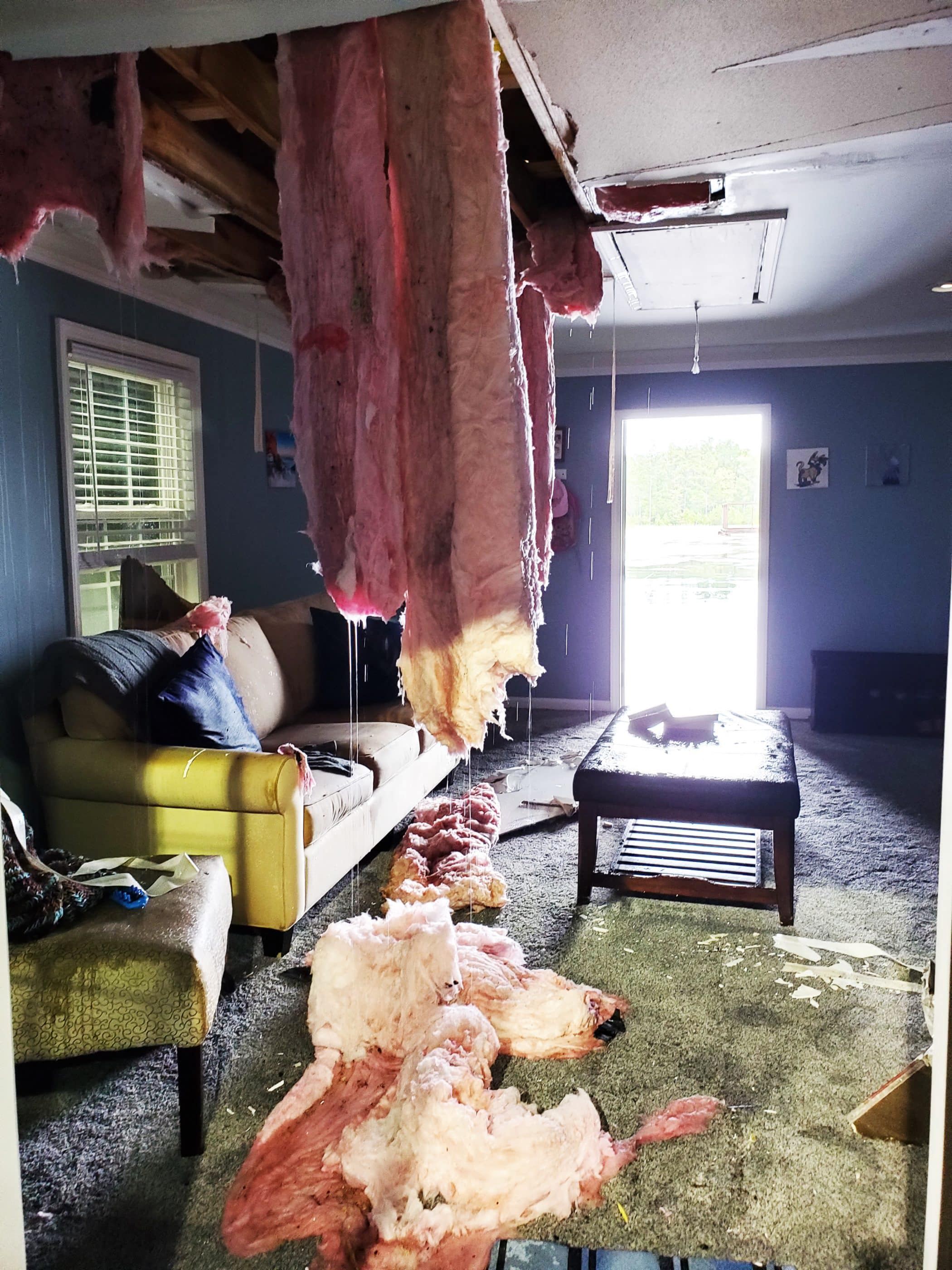
The FORTIFIED Roof standard, developed by the Insurance Institute for Business and Home Safety, is designed to keep roofs attached in high winds and keep water out even when the outer layer takes damage. Most of what makes these roofs stronger is invisible once the job is done - so an IBHS-certified evaluator came out roughly every other week during construction to photograph trusses and sealing layers before the next layer covered them. All the work was done by an IBHS-approved contractor. The result is a documented, certified record of exactly how each roof was built.
Otto is clear about why CHA did this. “We have resident safety. We have stewardship of those public housing assets,” she says. “That’s the focal point.” The insurance math is secondary. But the insurance math is still real.
The Part Nobody Talks About in the Relocation Brochure
Here’s the imbalance: the Federal Home Loan Bank and CHA paid to reduce the risk that insurers would have to cover. When roofs don’t blow off in storms, insurers pay fewer claims and smaller ones. That’s money that stays with the insurance company.
CHA is shopping for property insurance to take effect February 1, 2027. As of Otto’s last public comments on the subject, no insurer had promised that the FORTIFIED certification would lower their premium, shrink their deductible, or expand their coverage terms. The investment in safety has not, so far, produced any corresponding investment from the industry that directly benefits from it.
Dave Jones, the former California insurance commissioner who now directs the Climate Risk Initiative at UC Berkeley School of Law, has noted that the burden falls on property owners to push their brokers to actually underwrite based on risk-reduction improvements - and that insurers are under no obligation to reward the work.
This is not a Conway-specific problem. It is the environment that affordable housing providers operate in across the country, including in the smaller cities that tend to attract relocators looking for lower costs of living.
What This Means If You’re Moving
If you’re considering a move to a mid-size American city - the kind with a state university, a modest downtown, and housing prices that don’t require a spreadsheet to contemplate - the condition of the rental stock matters more than most relocation guides acknowledge.
Older affordable housing developments carry deferred maintenance risk. When a housing authority is managing that risk responsibly, as CHA appears to be doing, the building you’re renting may actually be better maintained than market-rate alternatives. FORTIFIED certification is a specific, documentable thing; if a development has it, that’s worth knowing.
But responsible management doesn’t insulate a housing authority from the insurance market it’s trapped in. If premiums keep rising regardless of the physical condition of the buildings, that money has to come from somewhere - and in affordable housing, there are only a few places it can come from: deferred maintenance on other systems, reductions in services, or operating reserves that were already thin.
The 91 households living under those new roofs in Conway are safer now than they were two years ago. Whether that safety produces any financial stability for the organization keeping them housed is, as of early 2027, still an open question CHA is taking to the insurance market with no guarantees.
A single unreplaced roof at CHA’s Oakwood Apartments - a 62-unit property across town - ran approximately $280,000 seven years ago. The Family Site had 47 of them.