In this article
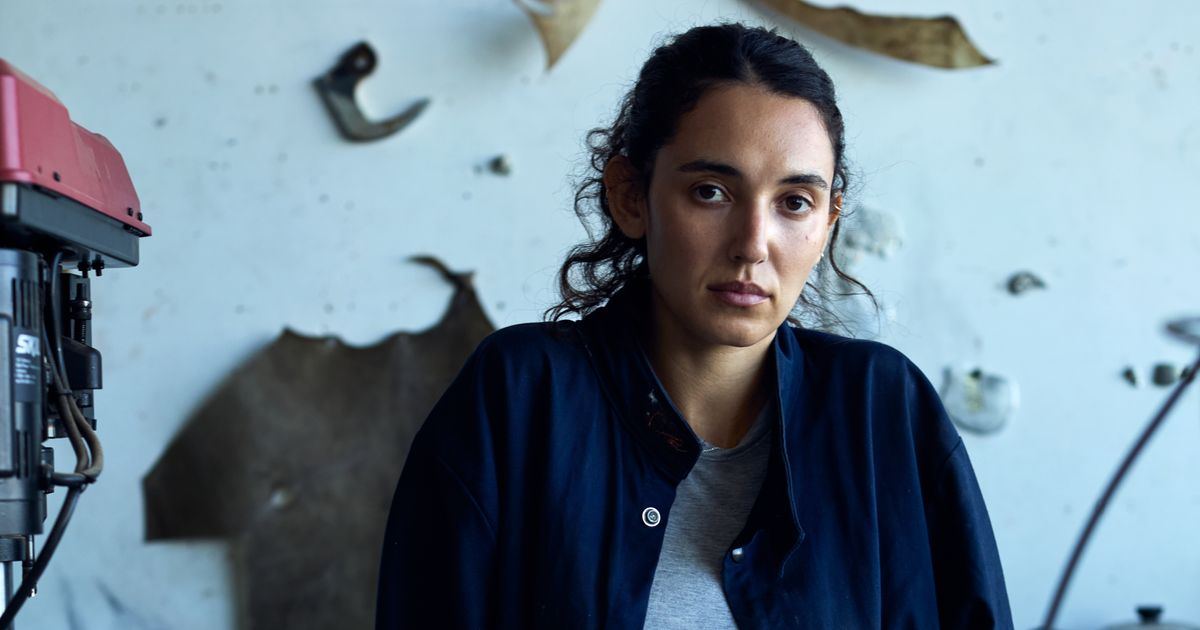
The address where Madeline Coven makes her work sits on the border between Bushwick and Queens - one of those liminal zones that maps refuse to name cleanly. The building she’s in has been partially converted into a high-end members’ club. Her studio is on the fourth floor, past a lobby furnished in vintage pieces, elevator up. On one side of her shared workspace: floor-to-ceiling boxes. On the other: drill presses and ventilation hoses. Street construction loud enough that you have to raise your voice.
This is what productive neighborhoods actually look like. Not curated. Not finished. Genuinely mixed, in the way that word is usually deployed as a euphemism but here means literally: you can get hydraulic equipment repaired and then go to a nightclub on the same block where someone is upstairs casting prehistoric fossils in aluminum.
The Building as a Neighborhood Diagnostic
If you’re relocating to a new city and trying to read a neighborhood correctly, pay less attention to the coffee shops and more attention to what’s happening in the buildings. A converted industrial space that houses both a members’ club and working artists’ studios is in a specific and transitional state. The members’ club is usually a leading indicator. It means capital has arrived but hasn’t yet fully displaced the people who were there before it.
Coven shares her studio with another artist. That kind of arrangement - two people splitting a fourth-floor space in a building that still has its industrial bones - is exactly what disappears first when a neighborhood gentrifies completely. It’s also what makes a neighborhood functional for anyone who moves there to actually make something, rather than to be near other people who are making things.
Before this studio, Coven spent three years working in the studio of furniture designer Minjae Kim. Before that, she worked as an artist’s assistant in Los Angeles. The trajectory matters: L.A. to someone else’s New York studio to her own. That path is harder and slower than it used to be in most major cities, and the neighborhoods where it’s still possible are narrowing.
What the Work Reveals
Coven’s upcoming show at Galerie Was on the Lower East Side will feature vessels made from cow and goat hide, fastened with pewter hardware. They don’t function as containers - they’re not meant to hold anything. For a Tribeca gallerist, she made sconces from animal hides with pewter embellishments, and wall lights with screens formed by pouring pewter into a tray and manipulating it as it cools. For a shop in Antwerp, she made mahogany tables edged in cowhide and pinned with pewter squares that read like belt buckles.
None of this is the point for someone considering a move. What is the point: this kind of work requires a specific physical environment. A hot plate. A windowsill lined with seeds and stones waiting to be cast. Baking trays stacked with globular metal forms. You cannot do this in 600 square feet in a building with noise restrictions and no freight elevator. You need the kind of space that only survives in neighborhoods that haven’t yet been fully legible to the market.
Coven grew up watching her father, an herbalist, stop every few feet on walks near their home to photograph plants and clearance ditches. Short walks that took forever. She credits that habit of close observation as foundational. It’s relevant here because the same kind of attention - slow, granular, willing to stop and look at what’s actually in front of you - is what distinguishes someone who chooses a neighborhood well from someone who chooses a neighborhood by reputation.
The Tipping Point Problem
The block Coven works on is telling you something. Beef distributors don’t leave quietly. Neither do hydraulic shops. But a members’ club with vintage furniture in the lobby is not there by accident, and it is not there to stay alongside the beef distributors forever. One of them is going to win. In most American cities, you already know which one.
For people relocating to New York - or to any city with neighborhoods in this state of suspension - the question isn’t whether a place is affordable now. It’s whether the conditions that make it interesting will survive the next three to five years of whatever is already underway. The members’ club in the lobby is not a sign that the neighborhood has arrived. It’s a sign that the clock has started.
Coven’s metal-casting tests for an upcoming Santa Fe exhibition are sitting in her studio right now. She carved fossil imprints from a New Mexico university’s paleontology archive into wood, then cast the voids in aluminum. The hot metal burned away some of the detail she’d carved. That’s the part she doesn’t fight.
Her studio is on the fourth floor. The lobby is already finished.