In this article
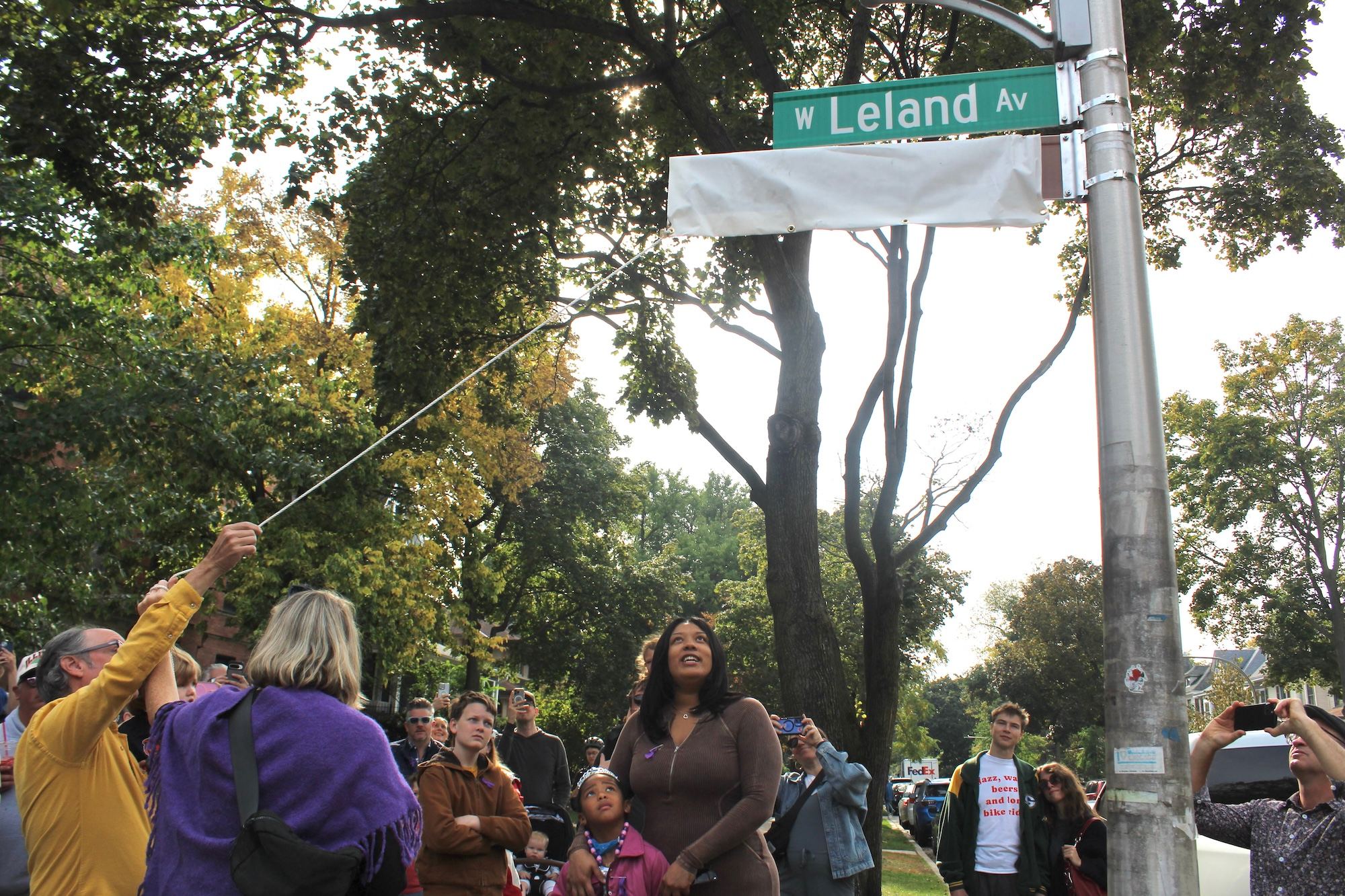
In October 2026, three green street signs went up along Leland Avenue in Uptown, at the intersections with Beacon Street, Clark Street, and Broadway. They read “Lily’s Greenway.” The name honors Elizabeth “Lily” Grace Shambrook, who was three years old when she was killed on this street in 2022. She was riding in a safety seat on the back of her mother’s bicycle when a ComEd utility truck, parked illegally in the bike lane, forced her mother into active traffic. A passing semi-truck did the rest.
This is what it sometimes takes to get a city to take a bike lane seriously.
What Actually Happened on Leland
Lily’s mother, Kate Snow, had no good option. With the ComEd truck blocking the lane, she moved left into traffic. The semi was pulling away from a stop sign. The space between the two vehicles closed. Snow lost her balance. Lily died.
Her father, Tim Shambrook, described Leland Avenue as “a highway for our family as far as getting back and forth.” He wasn’t speaking metaphorically - the family used that corridor constantly, the way families in walkable urban neighborhoods use the streets they live on. In the weeks following Lily’s death, a two-year-old named Raphael “Rafi” Cardenas was also killed by a driver while riding a scooter in nearby Lincoln Square. Two toddlers, one week, same city. The outrage that followed produced memorials, rallies, and, eventually, lawsuits and infrastructure conversations.
The family filed suit in 2023 against the city, ComEd, and the drivers of the semi-truck - companies Penske and Mondelez were named - arguing that “deficient” enforcement of bike lane rules created the conditions for the crash. The renamed greenway is partly a product of what followed: pressure from Lily’s parents, working with Ald. Angela Clay’s 46th Ward office, pushing for concrete safety measures along the route.
What a Greenway Actually Is
A greenway, in Chicago’s usage, is a bike route designated on residential streets - lower traffic, lower speed, lower stress than riding on a major arterial road. The idea is that families, kids, people who aren’t willing to play chicken with delivery trucks on Clark Street, should have a network of streets where they can move around without the math of survival. The Leland Avenue Greenway is that kind of route: not protected in the way a fully separated lane is, but calmer by design.
When you’re evaluating a city to live in - really evaluating it, beyond the median home price and the school district ratings - the bike and pedestrian infrastructure tells you something that rent comparisons don’t. It tells you how the city thinks about people who aren’t in cars. It tells you whether a neighborhood is actually livable for someone with young children, or whether it’s livable in the way that requires you to drive everywhere and never think too hard about it.
Chicago has a mixed record here, which is to say an honest one. It has hundreds of miles of marked bike lanes; it also has a long history of those lanes functioning mainly as illegal parking for commercial vehicles. The question for anyone moving to a neighborhood like Uptown - dense, transit-accessible, walkable by Midwest standards - is whether the infrastructure on paper translates to infrastructure in practice.
What Shambrook Said
At the October unveiling, wearing purple ribbons in honor of Lily’s favorite color, Tim Shambrook said something that should land differently if you’re thinking about relocating with children: “It’s nice to know that, out of the loss you can suffer, the city is actually answering some of the things that advocates have been asking for for so long. I hope it goes citywide.”
He also talked about what Lily was like. The family would take day trips by bike to parks across the city. She and her father biked to the Art Institute often enough that a security guard knew her by name. On a trip to the Field Museum, she asked if they could stop at Buckingham Fountain first - she knew the route. A three-year-old who knew Chicago by its landmarks, from a bike seat.
“A life spent on Metra, CTA, bike, stroller walking around your neighborhood, you have a much better grasp of your city,” Shambrook said. “She had that independence and ability to know where she was.”
Snow, speaking at the same event, described Leland as Lily’s “starting square, where every day was a new experience.” The renaming, she said, lets her reframe a location that was destroyed for her into something that belongs to her daughter again.
The Thing No Ranking Tells You
If you are moving to a city with kids, or planning to, the bike infrastructure question is not a lifestyle amenity question. It’s a question about how the city manages conflict between different kinds of road users - and who loses when those conflicts aren’t managed well.
Uptown has two-bedroom apartments in the low-to-mid $2,000s for rent, reasonable CTA access on the Red Line, and enough density to live without a car if you’re intentional about it. The Leland Avenue Greenway runs through it. Three signs now say “Lily’s Greenway” at Beacon, Clark, and Broadway.
What happens when the next ComEd truck parks in the lane is still an open question.