In this article
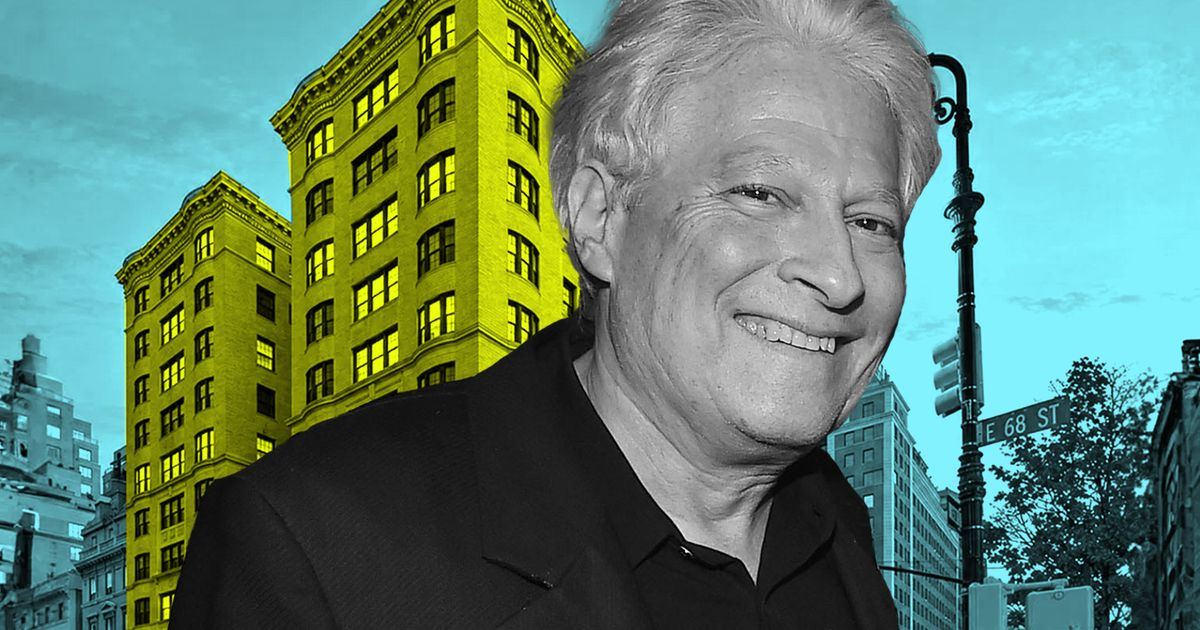
When developers convert old buildings into luxury condos, they tend to stage the units in creams and taupes - finishes that photograph well, offend nobody, and sell fast. Ziel Feldman, who converted the prewar building at 11 East 68th Street into condos in 2013 under the name the Marquand, knew this formula perfectly. He used it for everyone else’s units. For his own triplex penthouse, he went a different direction entirely: black marble on the floors, black marble on the walls, dark hardwood paneling, velvet furniture in charcoal and near-black, and art by Tracey Emin and Sanford Biggers glowing against the gloom. Feldman and his wife, Helene, are now selling it for $27.5 million.
That number is a markdown. He listed it for $39 million in 2020.
The gap between those two figures is where the real story lives - and it’s a story that anyone thinking about relocating to a major American city should understand before they start reading neighborhood guides.
The Architecture of Aspiration
Feldman was a real estate attorney before he became a developer. His firm, HFZ Capital Group, had genuine ambitions: he wanted to compete with the old-line New York dynasties, the Zeckendorfs, the Dursts, families whose names are inseparable from the city’s physical fabric. For a moment, it looked achievable. In 2015, HFZ broke ground on the XI, a twisting pair of towers designed by Bjarke Ingels on the High Line. The sales gallery alone featured an installation by set designer Es Devlin. It was the kind of project that gets written about in architecture magazines before a single unit is sold.
Then HFZ collapsed. Feldman’s former partner, Nir Meir, was arrested and charged with an $86 million fraud scheme involving the XI. Feldman blamed Meir for the firm’s implosion; Meir is still awaiting trial. The project was taken over by developer Steve Witkoff, under whom the condos sold quickly. The building that was supposed to make Feldman’s name got finished by someone else.
This is not an unusual arc. It just rarely gets narrated so cleanly.
What the Penthouse Actually Tells You
The listing for the penthouse includes digital renderings showing the apartment redone in the same creams and neutrals the other units at the Marquand wore in 2013. The message is pragmatic: if the black marble is too much, here is proof it can look like everything else. It’s an unusual admission - that the thing the seller loved most about the space is also its primary liability.
For relocators, that tension is instructive. The luxury end of any housing market is full of apartments and houses that reflect their owners’ specific, sometimes spectacular, taste - and those properties tend to sit longer, price-cut harder, and ultimately sell to buyers who are purchasing the bones, not the vision. The Feldman penthouse has five bedrooms, four full bathrooms, a formal dining room that seats 22, a wet bar, private elevator access, views of Central Park from less than a block away, and 2,600 square feet of private terraces with both indoor and outdoor fireplaces. The black marble is, in a sense, beside the point.
The Feldmans’ other properties followed a similar trajectory. They also owned an 18,500-square-foot mansion in Englewood, New Jersey, modeled on a Fontainebleau château they visited on their honeymoon - that sold in 2020. A Bridgehampton house went the following year for $50 million. The penthouse is the last piece.
The Part That Applies to You
Most people reading this are not in the market for a $27.5 million triplex. But the dynamics at play in a deal like this exist at every price point, in every city.
Developers build what they think will sell, or what they personally want, and those two motivations produce very different results. The units they sell to the public are designed for maximum appeal to the median buyer; the units they keep - or the customizations they make to their own homes - reveal what they actually value. When those personal choices go to market, there’s almost always a reckoning.
If you’re relocating to a city and evaluating new-construction or recently converted buildings, it’s worth asking what the developer kept for themselves, if anything, and what that says about the building’s actual quality versus its marketed image. A developer who lived in the building for a decade is a different signal than one who sold out immediately and moved on.
Feldman is now working on affordable and workforce housing through a firm called GoodHomes, partnering with his daughter. The projects are quieter. One developer described Feldman to New York magazine as someone who always loved the “razzle-dazzle.” The Marquand penthouse is the last physical evidence of that era - a room that seats 22 for dinner, going dark.
The listing brokers at Douglas Elliman did not respond to a request for comment.