In this article
Nobody moves to a city for the Target.
When people try to explain why they stayed somewhere - why they chose a particular block, a particular neighborhood, a particular city over the fifteen other places they were considering - they almost never lead with the cost of a two-bedroom or the commute time. They lead with the weird little shop they found on a Saturday afternoon. The one with the thing in the window they’d never seen before. The owner who knew what it was.
Art of Play, a specialty shop on Atlantic Avenue that sells toys, books, and what its co-owner Adam Rubin describes as “magic-adjacent objects,” became the subject of national attention this week after Kelly Clarkson posted a harsh review to her 8 million followers on X. She compared the experience of being told something wasn’t available for purchase to being “treated like Julia Roberts’ character in Pretty Woman.” Rubin, who opened the shop with two other co-owners, sat down with reporters Tuesday morning to walk through what actually happened.
His account: the store was packed. A staff member redirected a customer toward a similar item - standard floor behavior in any busy shop. The customer left after less than five minutes. The interaction was, in Rubin’s words, “that undramatic.” They wouldn’t have known anything went wrong if the tweet hadn’t appeared.
The Thing That Wasn’t For Sale (Except When It Was)
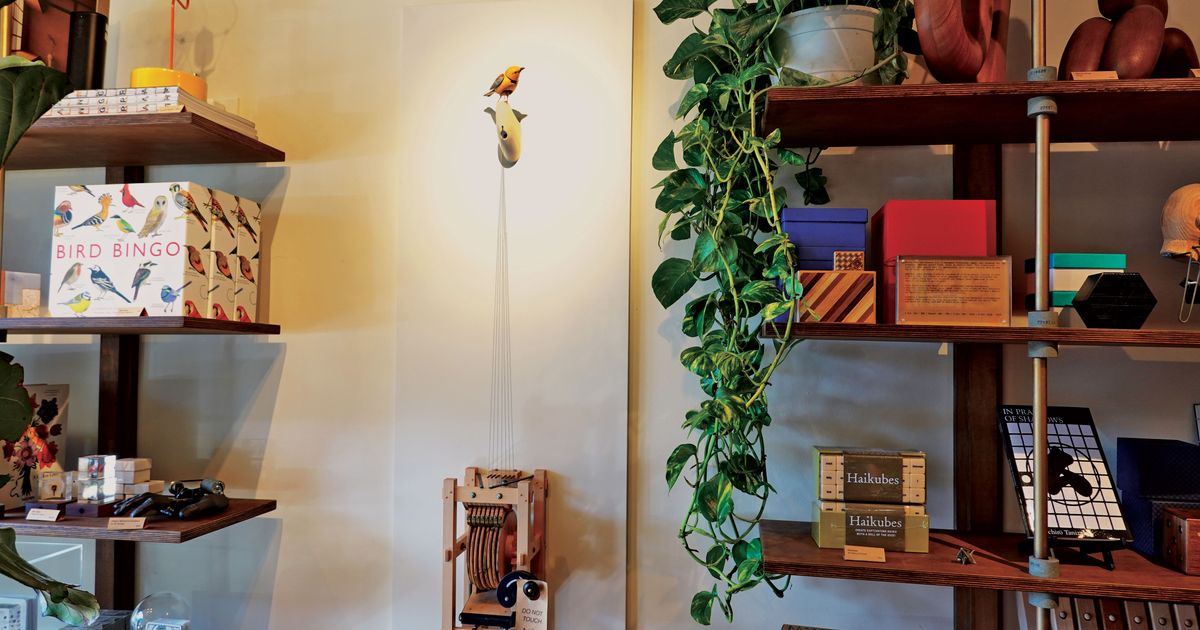
The object at the center of this was “Molly,” a one-of-a-kind singing and dancing automaton bird created by an artist named Bliss Kolb, permanently mounted on the shop’s wall and used in their magic performances. Rubin describes Kolb as someone who is not on social media and produces these machines over the course of years. Two exist. Art of Play has one of them.
When pressed on whether the bird had a price tag - and internet users did find evidence that it did - Rubin confirmed it. They’d listed a price because so many people asked. But the actual process of acquiring something like this runs through the artist, not the shop floor. “It’s like a piece of sculpture,” Rubin said. “It’s a fine-art piece.” As of Tuesday, the listed price had been updated to $15 million, which is the kind of answer that is both a joke and not a joke.
The misunderstanding here is genuinely understandable. Most people don’t walk into shops expecting the inventory to include objects that require a multi-year conversation with a reclusive craftsman to acquire. That’s not how retail works in most places. It’s exactly how retail works in the kinds of shops that make a street worth walking down.
What the Trolls Are Actually Doing
This is where it stops being a quirky celebrity story and becomes something more instructive.
After Clarkson’s post, the shop was review-bombed across every platform. Threatening calls and emails arrived in volume. People showed up on the sidewalk shouting about racial profiling. When neighbors filmed the confrontations, Clarkson’s followers identified and published those neighbors’ personal information. Rubin was direct: “Kelly Clarkson has put us in danger.”
The shop’s point-of-sale iPad - the screen a staffer looks at while ringing up a customer - was reportedly scrolling hate speech and threats of violence throughout their operating hours. Anyone who expressed support for Art of Play on social media was attacked. The shop turned off the phone. If a real customer tried to reach them, Rubin said, they would not get through.
On Monday, when the shop was closed, people brought pastries and cupcakes. Supportive visitors came in numbers on Tuesday. That part is real too.
Why This Matters If You’re Thinking About Where to Live
Here is the thing about independently owned specialty retail: it is genuinely fragile, and it is one of the primary ways a neighborhood signals that it’s worth your time. Art of Play is the kind of shop - specific, strange, operated by people who clearly care about the objects inside it - that functions as a sorting mechanism. Its existence tells you something about the street it’s on, the foot traffic that street gets, the kind of residents willing to spend an afternoon somewhere they might not buy anything.
These shops fail all the time. They fail because rents go up, because the owner burns out, because the neighborhood changes. They do not typically fail because a celebrity with a massive platform had a five-minute interaction during a busy afternoon and decided to characterize it to millions of followers as a class-based humiliation.
When you’re evaluating a city to move to, you will be handed a lot of data: median home prices, walkability scores, average commute. None of that data will tell you whether the neighborhood has anything to lose. Art of Play, whatever the outcome of this particular week, is the kind of shop that indicates a neighborhood does.
Whether it survives the attention is a different question.