In this article
Nationally, up to 40 percent of food served in schools ends up in the trash - roughly 530,000 tons a year, according to the World Wildlife Fund. That’s not an abstraction. It’s a proxy for how school districts manage limited budgets, how much they trust kids to participate in solving real problems, and whether the adults running things are paying attention to what actually happens at 11:45 a.m. on a Tuesday when a third-grader decides she doesn’t want her bag of carrots.
If you’re relocating with kids, or planning to, you’ve probably already looked up GreatSchools ratings and state assessment scores. Those numbers are fine for what they are. But they don’t tell you whether a school’s staff is stretched so thin that nobody has time to think about anything beyond the immediate. Food waste programs - unglamorous, logistically annoying, perpetually underfunded - are a decent diagnostic for that.
What One Georgia Elementary School Actually Did
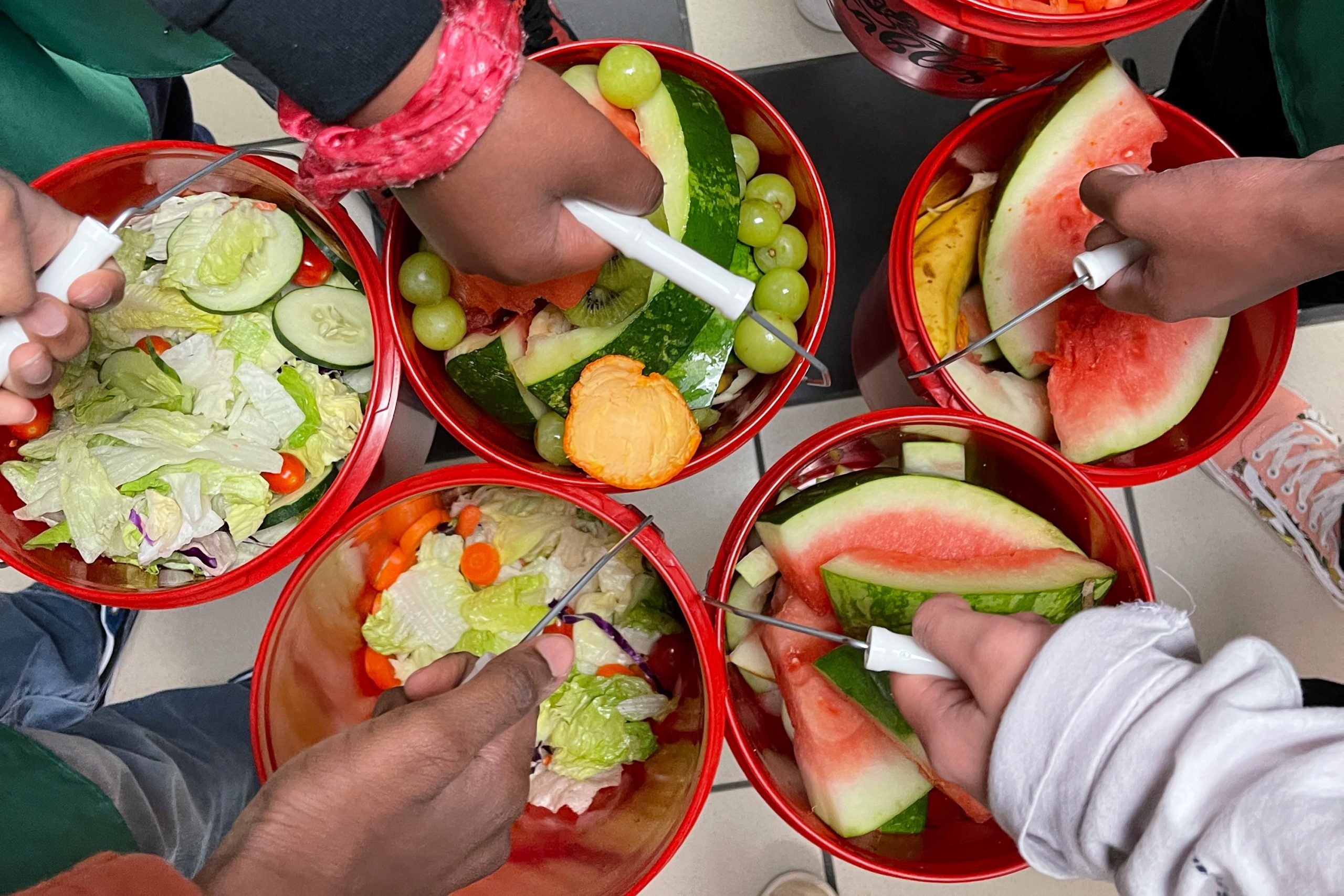
Lovin Elementary in Gwinnett County, Georgia, started tackling its food waste in late 2018 with a food audit - a low-tech exercise that involved setting up two tables at the cafeteria exit, handing third- and fifth-graders some buckets and scales, and finding out what was actually being thrown away. The supplies came from Green & Healthy Schools, part of the local nonprofit Gwinnett Clean & Beautiful. The methodology was not complicated. Students sorted outgoing trays into categories: fruits and vegetables here, extra milk there, plastic over there.
It was Taco Day. There was a lot of runny cheese. They collected 589 pounds of waste.
Of that 589 pounds, 120 pounds were what the program calls “recoverables” - sealed milk cartons, unopened bags of carrots and apples. Food that was perfectly edible and went straight into a landfill. The students, presented with that number, were not indifferent. They made announcements over the school PA telling classmates not to take milk they weren’t going to drink. They designed posters. Then they pushed for a share table: a physical station with baskets and a glass-front refrigerator where untouched food could be redistributed before the end of lunch.
By March 2019, a second audit showed lunch waste had dropped from 589 pounds to 435 pounds. The share table alone redirected 108 pounds of food that single day.
That’s not a miracle. It’s what happens when someone actually looks at the problem.
The Composting Chapter, Which Took Three More Years
In fall 2021, Green & Healthy Schools offered Lovin a composting grant through Food Well Alliance. A composting bin was installed. Neither the STEM specialist running the program nor the students knew much about composting when they started. That turned out to be useful. When a teacher admits she doesn’t know something, the kids, apparently, will go find out themselves.
They started small in spring 2022, with one fifth-grade class. Food scraps collected. Lessons taught. A few weeks later, the next class. By the time the program scaled, Lovin had reduced its food waste by roughly 70 percent compared to that first 589-pound audit day.
The school also had chickens in its garden. The teachers’ salad bar leftovers - lettuce, cucumbers - went to the chickens. This is either charmingly practical or a sign that someone at Lovin Elementary has figured out how to close loops that most institutions leave open. Probably both.
Why This Matters If You’re Moving
Gwinnett County is a large, sprawling suburban district northeast of Atlanta - not the kind of place that shows up on lists of experimental or progressive school systems. Which is exactly why this example is useful. Lovin Elementary didn’t do this because it’s a special school in a special district. It did it because a few people found a program, applied for grants, and were willing to start by counting what they threw away.
When you’re evaluating a school district before a move, ask whether schools have received grants for sustainability or food programs. Ask whether there are partnerships with local nonprofits. Ask whether extracurricular learning - real extracurricular learning, not just after-school tutoring - has survived the budget cycles. These aren’t questions about ideology. They’re questions about whether the district treats schools as places where things get figured out, or just places where the mandated curriculum gets delivered and the day ends.
The WWF estimates that school food waste generates roughly 1.9 million metric tons of greenhouse gas emissions per year. That number is big enough to feel meaningless. The 589 pounds on Taco Day in Gwinnett County is not.
What a district does with a share table and a composting bin tells you something a test score ranking won’t: whether anyone there is paying attention to what falls through the cracks.