In this article
When filmmaker and producer Steve Willis moved into the Hotel Chelsea in 1994, the front desk had bulletproof glass and you had to be buzzed through the door. Chelsea wasn’t yet the gallery district, wasn’t yet the gay neighborhood, wasn’t yet anything in particular. There was a dive bar called Rawhide. That was roughly the sum of it.
He’s been there for over three decades now.
Willis didn’t set out to become a long-term tenant. He came to New York to produce Mariah Carey’s “Anytime You Need a Friend” music video and ended up at the Chelsea because Stanley Bard - the building’s owner and manager at the time - suggested it was cheaper than hotels. Bard had a reputation for functioning as something like a casting director for the building, selecting residents the way a theater director populates a stage. Willis got cast. He never left.
This is not a story about the Hotel Chelsea specifically, though that building has absorbed enough mythology to fill several books. This is a story about what happens when you stay in one place long enough to watch a neighborhood become unrecognizable - and what that experience might teach anyone thinking about planting themselves somewhere new.
What You’re Actually Betting On
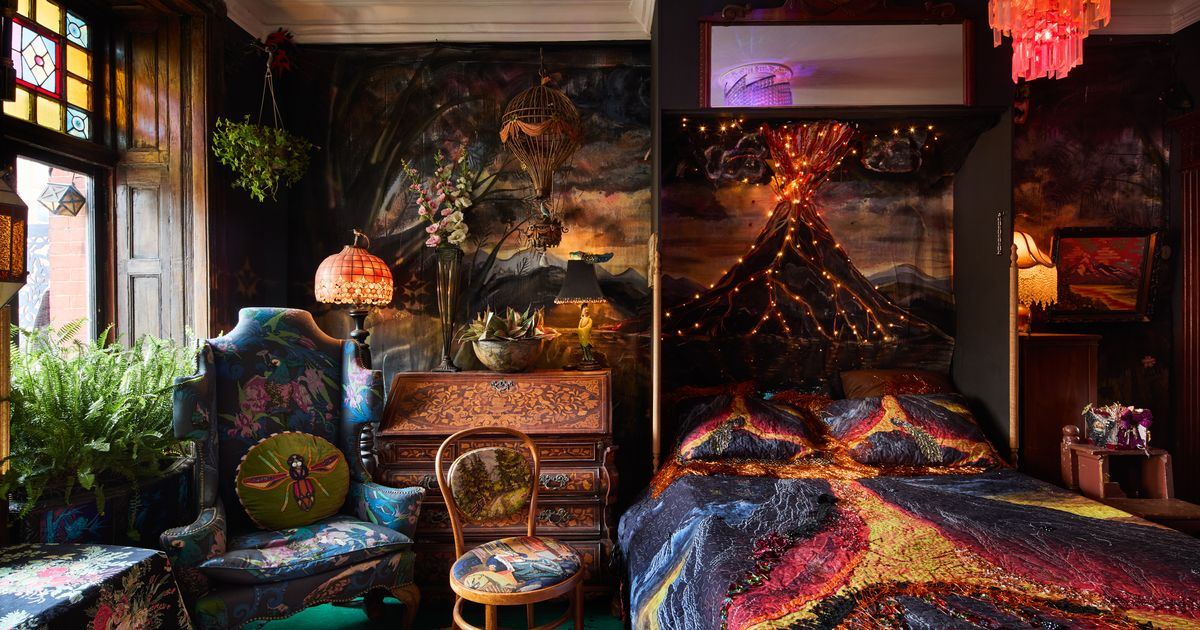
When you choose a city - or a neighborhood within it - you’re not choosing what it is. You’re choosing what you think it might become, or what you’re willing to tolerate if it doesn’t. Willis moved into a run-down apartment with bad carpeting and so many layers of white paint over the original dark woodwork that the architectural detail had been essentially buried. He stripped it back. He foraged the Chelsea Flea Market. He took furniture from the building’s basement when Bard waved him on. The area around him was, in his word, a “no-man’s-land.”
The neighborhood did not stay a no-man’s-land.
That transformation - from rough-edged and ignored to expensive and legible - is the dominant story of American urban neighborhoods over the past thirty years. People who got in early, in cities from Portland to Pittsburgh to Raleigh, made that bet and won it in ways they didn’t fully anticipate. People who moved somewhere already polished paid for someone else’s foresight.
The question for anyone relocating now is which version of that story they’re walking into.
The Second Apartment Problem
In 1996, the studio across the hall from Willis’s one-bedroom came available. He rented it too.
That detail is easy to skim past, but sit with it for a moment. Two years into his tenancy, he had enough confidence in the building - and presumably in his own finances - to take on a second space directly across the hall, which he connected to the first to create an adjoining pair of studios. He eventually converted the original one-bedroom to a studio as well. What started as a single apartment became a compound.
This is a pattern that shows up repeatedly among people who commit to a place rather than auditing it. They expand into the space the city offers them. They develop relationships - with landlords, with neighbors, with the specific chaos of a particular block - that produce opportunities invisible to newcomers. Willis could pilfer basement furniture because Bard trusted him. He got a second apartment because he was already there.
None of this is replicable in the abstract. But the underlying mechanism - deep familiarity producing access - is real, and it’s available in any city where you’re willing to stay long enough.
What Stays and What Goes
Willis still has Janis Joplin’s soap dish and toothbrush holder from the apartment she once occupied. Patti Smith told him she was in that room the first time Kris Kristofferson sang “Me and Bobby McGee” to Joplin. He directed music videos for Patti LaBelle and Mary J. Blige. He now choreographs fountain shows for hotels including the Bellagio in Las Vegas. His Dolly Parton painting is, by his account, the only new thing in either apartment - though he does concede the mattress, sheets, and towels.
The point isn’t the accumulation of objects, though Willis describes himself plainly as a pack rat and the family archivist. The point is that he built a life inside a specific place, and the place absorbed that life back. The 19th-century French wallpaper he found on eBay. The inlaid desk from the City Opera Thrift Shop. The Victorian wall unit repurposed as a door frame. The café chair Rebecca Romijn made from embroideries she finds online. A sofa he uncovered from its plastic wrap and felt, in his words, almost sacrilegious removing it.
That accumulation is only possible with time.
The Thing the Rankings Don’t Measure
Every “best places to live” ranking measures what a city offers at the moment of publication: median home price, commute time, walkability score, number of breweries per capita, whatever. None of them measure what a place might offer you in ten years if you show up, stay, and pay attention.
Rawhide is closed now. The bulletproof glass at the Hotel Chelsea front desk is long gone. The building itself has been through ownership changes and renovation controversies that Willis watched from the inside. The neighborhood around it costs considerably more than it did when he moved in.
He kept his soap dish.