In this article
There’s a version of Los Angeles that exists in the imagination of anyone who hasn’t lived there: celebrity restaurants, $40 cocktails, valet parking. That version is real, and you’ll encounter it. But it’s not the city most people actually live in, and it’s not what will determine whether you feel at home after six months.
What tells you more: a taco stand on West Sunset Boulevard in Silver Lake where the owner, Saúl Pérez García, uses organic beef tallow flour tortillas, trims the fat and nerves from the meat himself, and cooks it over a low flame in the Hermosillo style. Tacos Royale, at 2511 W. Sunset, near Coronado Street, has a downstairs bar adjacent to the parking lot stand. You can get an asada burrito and a beer and stand outside in October without a coat. That detail - standing outside in October without a coat - is the kind of thing that doesn’t make it into cost-of-living calculators but absolutely factors into whether you’ll ever want to leave.
Silver Lake and the Mythology of “Discovering” a Neighborhood
Silver Lake has been “up and coming” for so long that the phrase has lost all meaning. What’s true is that it’s dense with exactly this kind of operation: counter-service spots run by people who are serious about one specific thing, open late enough to be useful, and priced for the people who actually live nearby rather than for visitors. If you’re relocating from a mid-sized city and worried that LA will price you out of the food culture you’re used to - the casual, frequent, unremarkable-Tuesday-night dinner - Silver Lake is evidence that it doesn’t have to.
The San Fernando Valley Correction
Glendale sits at the eastern edge of the San Fernando Valley, and if you’re apartment-hunting in LA, you’ll eventually look at it seriously. Rents trend lower than Silver Lake or Los Feliz. The tradeoff, people assume, is that the food is worse.
It isn’t.
Bea Bea’s, with locations at 301 N. Central Avenue in Glendale and a second in Burbank, runs a brunch menu built around a rotating selection of pancakes - matcha with green tea mascarpone cream, black sesame, Thai tea, cornbread with salted honey butter - and lets you order a flight of three for the table. Alongside that, the menu runs savory: huevos rancheros, loco moco with corned beef hash instead of a burger patty, breakfast burritos. This is not the kind of place that exists to be written about. It exists because there’s a neighborhood around it that eats here on weekends.
Also in Glendale, at 524 E. Glenoaks Boulevard: We’re Pouring, a sports bar that carries Green Cheek, Cellarmaker, de Garde, and Beachwood on draft - a beer list that would be notable in any city and is genuinely surprising in a strip-mall pub in north Glendale. Thin-crust pizza, a well-calibrated cheese blend, multiple screens for college football. The kind of place you find in month three of living somewhere, feel absurdly relieved about, and then go to more than you’d ever admit.
Glendale comes up constantly in relocation conversations about LA because it threads a needle: accessible to both the east side and the Valley, with real neighborhoods rather than arterial sprawl, and cheaper than most of the zip codes people reflexively target when they move to the city.
Koreatown and the Price-Per-Quality Argument
The case for Koreatown as a landing spot for new arrivals is straightforward and financial: you get more apartment for less money than in most of the neighborhoods that dominate LA relocation discourse, you’re close to the 10 and the 110, and you’re surrounded by one of the more concentrated stretches of good, affordable food in the city.
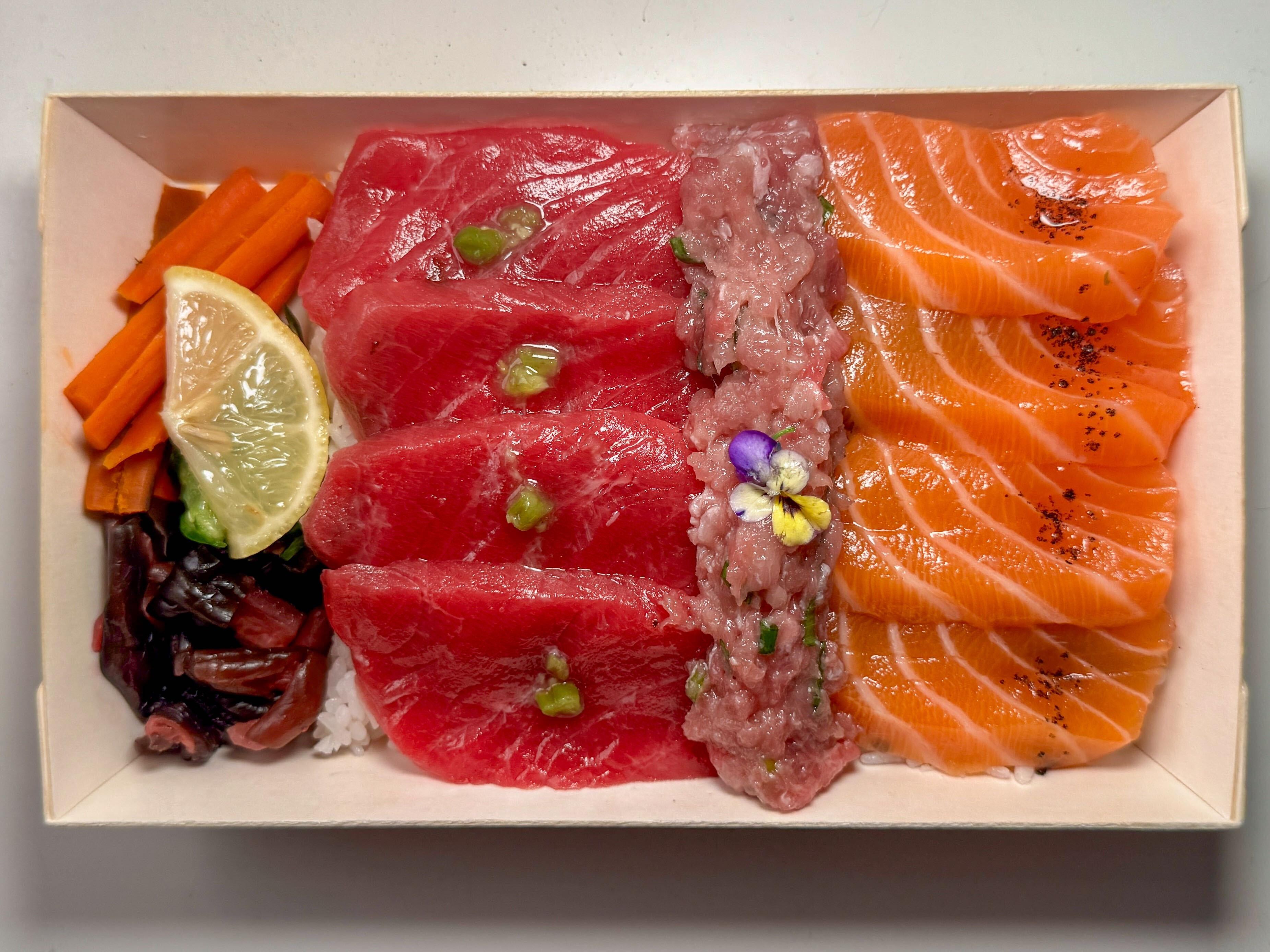
Tiger’s Den, at 687 S. Hobart Boulevard Suite D, is a recent example. The interior runs minimalist - white shelves, clean lines - but the operation is grab-and-go practical: a hot rack replenished with unagi dons and karaage, a chilled section with chirashi sets around $30, softshell crab rolls, yellowtail nigiri, vinegary sunomono. There’s a small dining room in the back if you want to eat on site. Down the street, Yama Sushi occupies roughly the same niche at roughly the same price. Having two solid options within walking distance of each other is not a small thing when you’re calibrating whether a neighborhood will actually suit daily life.
Thirty-dollar chirashi is not cheap in absolute terms. In the context of Los Angeles sushi - where a sit-down omakase starts at well over $100 and a mid-range restaurant dinner for two clears $80 before drinks - it’s a different category entirely.
What Any of This Has to Do with Moving
The neighborhoods that work for people long-term in Los Angeles are almost never the ones they initially target. The dreamers aim for Venice or Silver Lake and land in Glendale or Koreatown and, after a period of mourning, realize the trade was fine. More than fine.
The question worth asking before you move isn’t just “can I afford the rent?” It’s “can I afford the version of this city I actually want to live in?” A bar that pours de Garde and Cellarmaker on a Tuesday night in a neighborhood where a two-bedroom goes for something reasonable - that’s data.
What you do with it is your problem.