In this article
Seventeen years is longer than most people stay in a neighborhood.
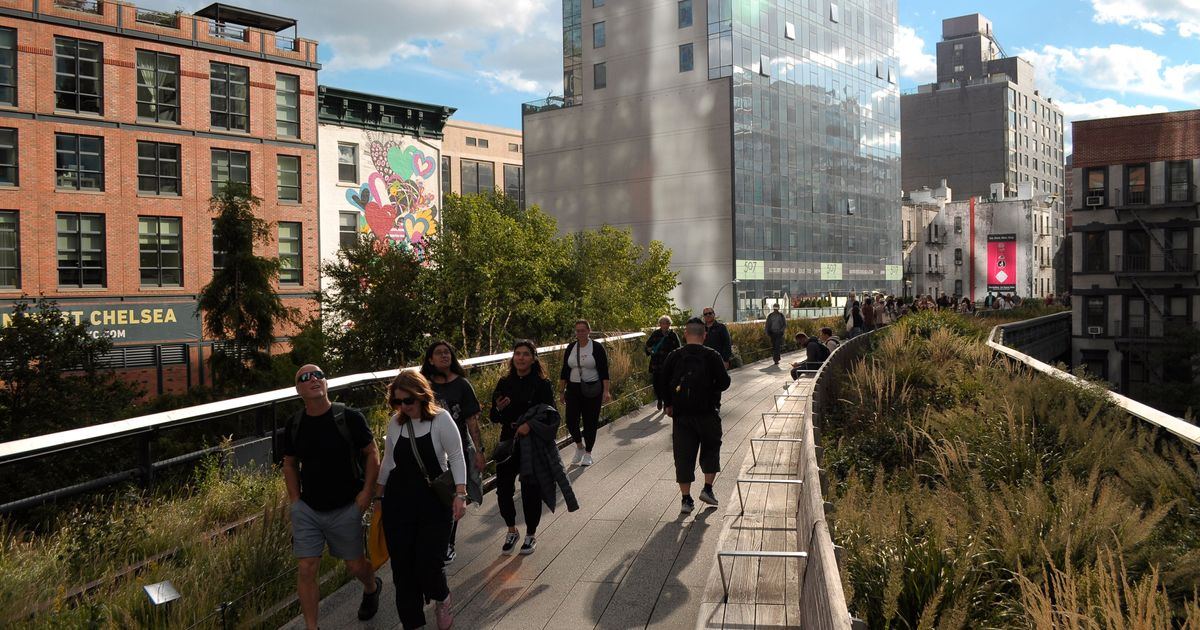
When the High Line first opened in 2009, it was a former freight rail line converted into an elevated park along Manhattan’s West Side - a genuinely unusual piece of infrastructure repurposed into public green space. The project was covered as a revelation, and the surrounding blocks in Chelsea responded accordingly: property values moved, galleries followed, then restaurants, then the starchitect towers. By the time Hudson Yards materialized at the northern end, the transformation was so complete it had become a case study in urban planning programs everywhere.
What those case studies tend to skip: the last section of the High Line’s garden didn’t exist until now. Next month, the Rail Yard Preserve’s 34th Street terminus will finally be planted out - 2,561 square feet of in-ground beds designed by Dutch landscape architect Piet Oudolf, the same designer behind the rest of the park’s naturalistic plantings. Sedges. Grasses. A coral bells variety called Heuchera villosa “Autumn Bride,” which produces white flowers above light-green leaves in late summer. Field Operations, the landscape team that worked with Oudolf on the entire 1.5-mile park, is handling installation.
This is also the only section of the High Line planted directly in the ground. Everything else sits in eighteen inches of soil on the elevated tracks. The 34th Street section, which runs between Eleventh and Twelfth Avenues, is narrow and has a parking lot on one side and a road on the other. Richard Hayden, the High Line’s senior director of horticulture, told the New York Times that when the 34th Street garden opens, “there will not be a construction shed anywhere on it for the first time in anybody’s memory.”
That sentence should interest anyone who has ever chosen a neighborhood based on what it’s becoming rather than what it is.
The Lag Between Promise and Completion
The section from 30th to 34th Streets - the Rail Yard Preserve - was always the rough end. For years it had what Friends of the High Line charitably described as “minimal plantings and maintenance”: weeding, essentially, rather than the deliberate Oudolf-style curation that made the rest of the park feel considered. The 34th Street entrance lacked proper signage at Twelfth Avenue. Visitors arrived at the terminus of a famous park and found something that felt unfinished, because it was.
Separately, the Prairie Terrace at 17th Street - another Oudolf-designed section - spent nine years behind scaffolding because of adjacent construction. It’s also reopening now, replanted with species chosen for the changed sunlight conditions that resulted from the towers that went up around it: blackhawk big bluestem, great globe thistle, sea holly, black-eyed Susans.
Nine years of scaffolding at one section. Seventeen years to complete the whole thing.
What This Means If You’re Moving Somewhere
Most people evaluating a city for relocation look at what’s there. The smarter question is what’s there now versus what’s been promised for the last decade, and whether the gap between those two things has been closing or just talked about.
The High Line’s story is unusually honest in this regard, because it’s been publicly documented the whole time. You can trace the promises against the delivery. The result is genuinely good - Oudolf’s planting design has aged well, the park draws roughly eight million visitors a year according to Friends of the High Line, and Chelsea is unrecognizable compared to what it was in 2005. But the version of Chelsea that existed in 2012, with the park half-built and the Rail Yard Preserve basically unmaintained, was a different place to live than the one that exists today.
Smaller American cities are full of High Line analogies. A riverfront trail that’s been “phase one complete” for six years. A transit line perpetually eighteen months from opening. A downtown corridor with renderings in every empty storefront window. These aren’t necessarily fraudulent - big public projects genuinely take this long - but the timeline is load-bearing information if you’re deciding where to put down roots.
The relevant questions aren’t whether the project exists or whether it looks good in the renderings. They’re: What’s the current phase, and how long has it been in that phase? What does the incomplete version of this neighborhood feel like to actually live in? And if you’re here for the park or the trail or the greenway, is the section near where you’d actually live finished - or is it the Rail Yard Preserve end?
The High Line’s 34th Street entrance will also get improved wayfinding signage at Twelfth Avenue when the garden opens. That detail - the fact that the northern terminus of one of the most visited urban parks in the country needed better signs to help people find it - is its own small commentary on the distance between a project’s reputation and its daily reality. Reputation travels faster than sedges.