In this article
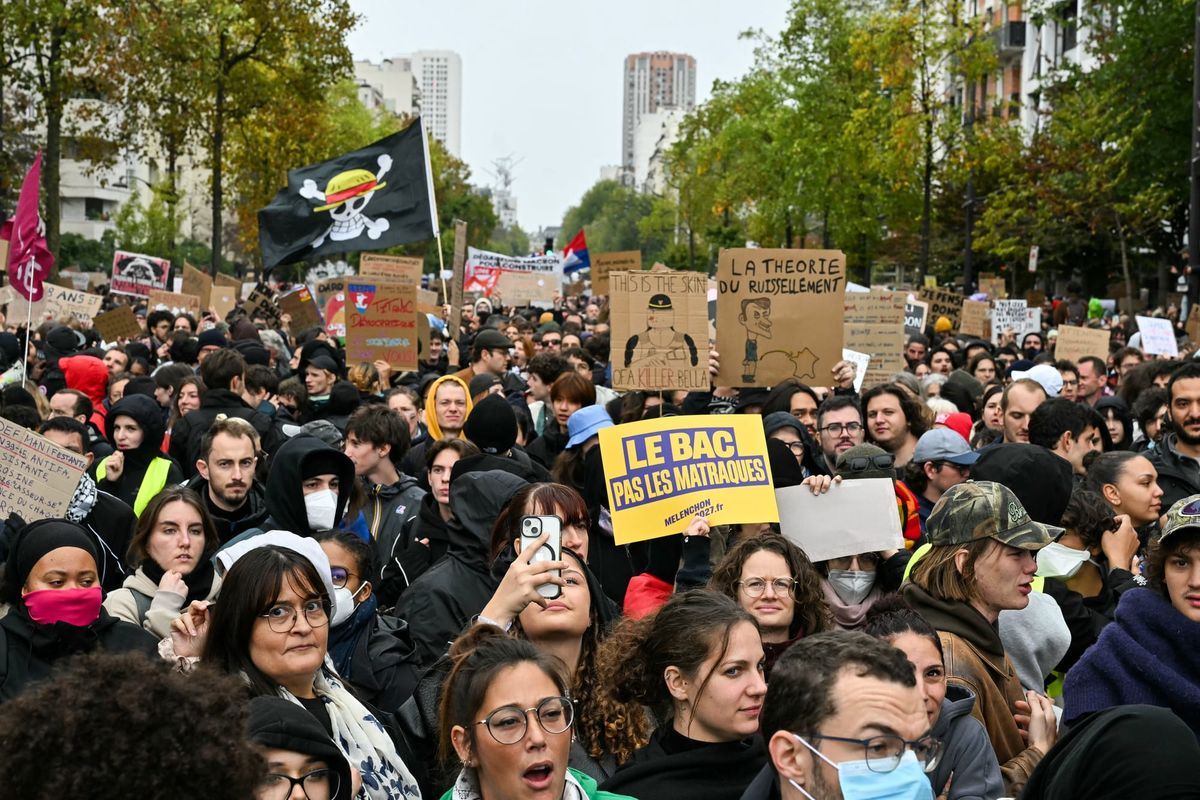
In late October, Paris saw its culture sector do something that doesn’t happen in most American cities: it organized. Not a benefit concert. Not a hashtag. Tens of thousands of artists, art students, and culture workers gathered at Porte d’Italie alongside labor confederations and student unions, part of a sustained movement called Cultures en Lutte - “Cultures in Struggle” - that had been building since mid-September. The National Union of Visual Artists (SNAP-CGT) was a driving force. The French government had deployed Sentinelle anti-terror soldiers, armored vehicles, water cannons, and helicopters. More than 250,000 people showed up in Paris anyway. Police arrested roughly 1,000 protesters that day alone.
This is not an article about France.
What “Culture” Actually Means in a City
The word gets used promiscuously in relocation coverage. Every midsized American city with a converted warehouse and a First Friday event claims a thriving arts scene. What Paris demonstrated - in a way that’s genuinely useful to think about - is the difference between a city where culture is decoration and a city where culture is infrastructure.
Decoration is what you get when a downtown development authority commissions a mural to soften a parking garage. Infrastructure is what you get when the people who make things have organized institutions, sustainable income, and enough of a stake in public life that they’ll march through water cannons to defend it.
Most smaller American cities, if you’re honest about it, are operating closer to the decoration end.
What to Actually Look For Before You Move
This isn’t an argument against relocating to a smaller city. It’s an argument for looking past the gallery count.
When you’re vetting a city’s cultural life, the relevant questions are structural. Does the city have an arts district that exists because artists chose it, or because a developer branded it? Is there a local union or advocacy organization for working artists - not a “creative economy” task force, but something with actual membership and dues? Are there affordable live-work spaces, and have any been lost to rezoning in the last five years? What happened to the last arts space that closed?
In Asheville, North Carolina, the River Arts District spent years as genuine working studio space before rising rents began pushing out the painters and ceramicists who built its reputation. That’s a common arc. The question isn’t whether a city has an arts district - it’s who it’s for now, and what happened to the people who were there first.
In Detroit, the decades-long collapse in property values created the conditions for a genuinely artist-driven recovery in neighborhoods like Corktown and parts of Midtown. That’s now under pressure from the same appreciation that made it look like a success. The creative class tends to arrive, raise prices, and then get priced out by the people who followed them.
The Protest Test
One imperfect but revealing indicator: find out whether artists in a given city have ever organized around anything beyond their own careers.
It sounds like a strange criterion. But Cultures en Lutte didn’t materialize from nowhere. It reflects decades of French labor culture applied to the arts sector - a tradition of treating cultural work as work, with corresponding rights, wages, and collective power. A painted sign at the October 24 march showed Emmanuel Macron using “our rights” as toilet paper. Another read: “The boat is sinking, but the politicians are fighting over who will be captain.” These are people who understand that their professional situation is political.
In most American cities, the equivalent energy goes into Instagram and grant applications.
That’s not a moral failing - it’s a structural one. The American arts economy is organized around individual hustle in a way that makes collective action genuinely difficult. But cities vary. Some have arts councils with real advocacy teeth. Some have seen artists show up at zoning hearings to fight displacement. Some have not.
A Few Honest Observations
If you’re a working artist relocating - not a hobbyist with a salaried spouse, but someone whose income depends on your practice - the cities that tend to offer the most sustainable ground right now are those where the cost of space is still low enough that you’re not immediately on a treadmill. That window is closing in a lot of places simultaneously.
Pittsburgh’s Garfield and Bloomfield neighborhoods still have studios in the range of what you’d pay for a closet in Brooklyn, though that’s been true for ten years and the trajectory is not secret. Tucson has a genuine working-artist population in the warehouse district near downtown, with rents that were, as recently as a couple of years ago, in ranges that permitted actual experimentation rather than just survival.
Neither city is Paris, in the sense that neither has a SNAP-CGT equivalent willing to face down an armored vehicle. But that’s not the only measure.
The real question, when you’re standing in a city deciding whether to commit, is whether the people making culture there seem to think it matters - not as a lifestyle amenity, not as a neighborhood brand, but as something worth fighting about.
In some cities, you can feel that. In others, the murals are just prettier parking garages.