In this article
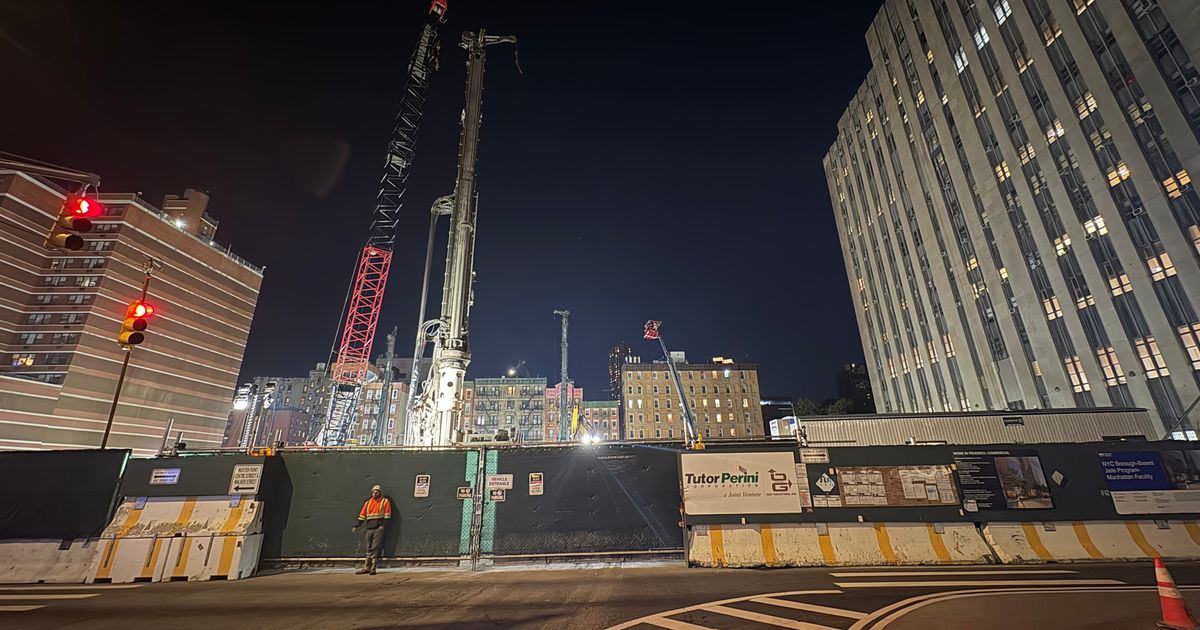
The four hours between midnight and 4 a.m. are the only window when Jon Alpert, a 77-year-old documentarian recovering from cancer treatment, can sleep without noise. He lives in Manhattan’s Chinatown, next to the construction site of a forthcoming 1,040-bed jail. The rest of the night - and most of the day - belongs to Tutor Perini and O&G Industries, the design-build team drilling a 335-foot tower into the former site of the Manhattan Detention Complex, known as the Tombs.
This is not a New York story. It’s a relocation story.
The Thing About Infrastructure Projects
When people move to a new city or neighborhood, they check walkability scores and school ratings and commute times. Almost nobody pulls construction permits for the surrounding blocks or looks up what’s been approved for the empty lot across the street. That oversight can cost years of sleep - sometimes literally.
The Chinatown jail is a useful extreme. According to a city advisory published this month, work on White Street now runs from at least 6 a.m. to midnight on weekdays, with deliveries beginning at 4 a.m. Saturday brings daytime work on top of that. The city installed dust and noise monitors on-site, added sound blankets and noise barriers - and then kept drilling. One resident and her husband, in their rent-stabilized apartment nearby, had already stopped opening their windows because of the noise. Now they’re also sleeping under floodlight conditions the lawsuit describes as “essentially daylight.”
An 88-year-old woman living at Chung Pak, the low-income senior facility directly adjacent to the site, says demolition dust has affected her health and forced her to relocate to a different unit within the building. She moved because of a construction project she had no vote on.
Nobody Told Them It Would Last This Long
The Manhattan jail was supposed to be part of a plan to close Rikers Island and replace it with four borough jails by 2027. That deadline is effectively gone. The Manhattan facility, last of the four to be completed, is now projected to open in 2032. Neighbors and local groups - including Welcome to Chinatown, a nonprofit focused on supporting Chinatown businesses, and Neighbors United Below Canal, a local advocacy group co-founded by councilmember Christopher Marte - filed suit in Manhattan Supreme Court this week to stop the after-hours construction, if not the project itself.
“They’re already going to miss the legal deadline by five years,” said Vic Lee, co-founder of Welcome to Chinatown. “That doesn’t mean that Chinatown should have to suffer.”
Marte put it more plainly: most New Yorkers have dealt with Con Edison or DEP tearing up the street for a few nights. You endure it because you know it ends. “This,” he said, “is pretty much permanent.”
What This Has to Do With You Moving Somewhere
If you are considering a move to any mid-size or larger American city, the Chinatown situation illustrates a specific risk that almost no relocation guide addresses: the long-horizon construction project. Not the two-week pipe repair. The five-to-ten-year infrastructure commitment that reshapes a neighborhood’s livability for a decade.
These projects tend to cluster in a few predictable places. Downtown-adjacent neighborhoods, especially those with older jails, courthouses, or transit infrastructure, are frequent targets for replacement projects. So are neighborhoods near highway interchanges slated for redesign, riverfront parcels targeted for flood mitigation, and blocks near hospitals expanding their footprints. In many cities, this information is publicly available - buried in planning commission minutes, capital improvement budgets, or environmental impact reviews that almost nobody reads before signing a lease.
Jon Alpert’s nonprofit media center, DCTV, is in the same building where he lives. Its 7 p.m. screenings, audio recording services, and evening classes have become unworkable. That’s a business and a livelihood, not just a sleep schedule.
What to Actually Look Up Before You Commit
Before you rent or buy anywhere, run the address through your target city’s building department permit database. Most cities have them online now, though the interfaces range from clean to genuinely hostile. Look for any active permits within a two-block radius - not just at the address. Pay particular attention to permits tied to government agencies or utilities, which tend to carry longer timelines than private developers and are harder to sue into compliance.
Search the city’s capital improvement plan for the neighborhood name. These documents, typically published annually, list every project the city has committed funding to and its projected timeline. A new jail, a transit hub, a bridge deck replacement - it’ll be in there, often years before ground breaks.
Talk to the people who run the corner store, not the real estate agent.
The Chinatown lawsuit may or may not succeed in limiting nighttime drilling. What it won’t do is shorten the project. The 335-foot jail is going up regardless. And somewhere in whatever city you’re considering, there is almost certainly a permit filed for a building near a block that looks, right now, perfectly quiet.