In this article
The real estate industry has a structural problem that no open house will surface: the person showing you the apartment is not working for you. They are working for the seller, or for their commission, or for their reputation with a developer who has twelve more units to move. This is not a secret. It is also not something you will read in any city’s relocation guide.
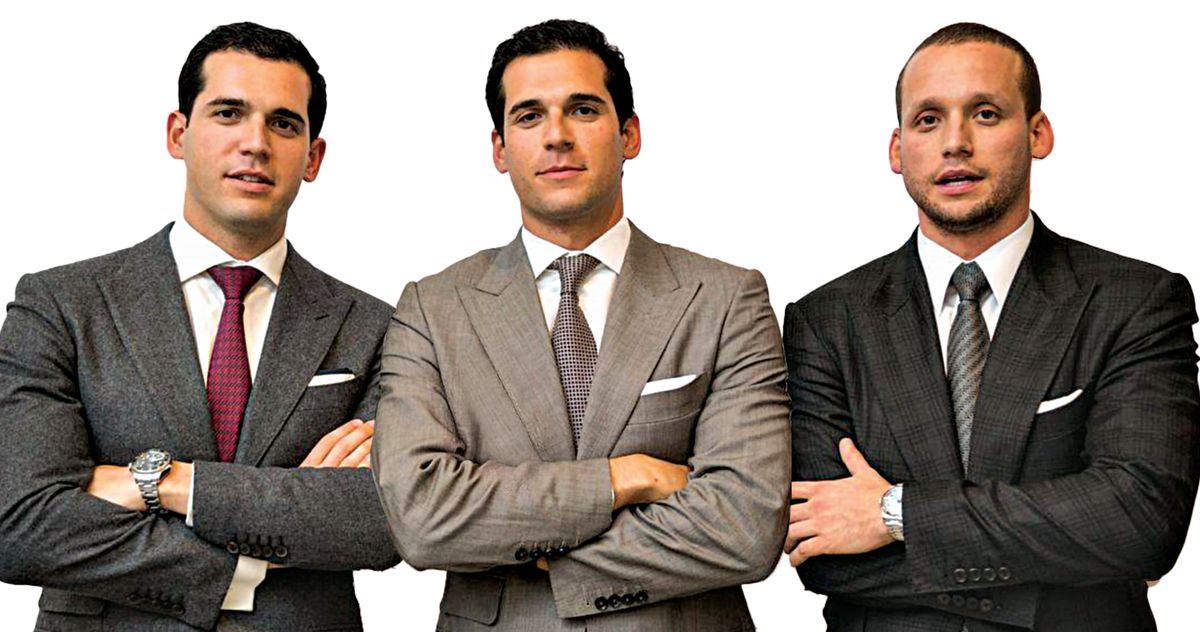
The case of Oren, Tal, and Alon Alexander - the three brothers convicted in March 2026 on all ten federal counts of sex trafficking and sexual assault, with life sentences being sought by prosecutors - is, on one level, a criminal story. On another level, it is an unusually well-documented illustration of how luxury real estate markets produce and protect their own elites, and what that protection costs everyone downstream.
What the Market Rewards
The Alexander brothers grew up in Bal Harbour, a 3,000-person enclave on the north end of Miami Beach, wedged between Biscayne Bay and the Atlantic. Their parents, Shlomy and Orly, emigrated from Israel and built Kent Security into one of South Florida’s largest private security contractors - guarding gated communities, the former Versace mansion on Ocean Drive, and Miami City Hall. By the time the Alexander boys were teenagers, the family had a waterfront Mediterranean-style mansion on Bal Bay Drive with a pool overlooking the bay.
The business philosophy, as described by a former Kent employee, was uncomplicated: “Success is all that matters to them. Step on anybody you have to step on. Screw them before they screw you.”
That ethos translated directly into how Oren and Tal operated as real estate agents in Manhattan. They became top producers at Douglas Elliman. They sold eight-, nine-, ten-figure properties. At their 2015 birthday party - held in a $50 million townhouse on the Upper East Side that they happened to be listing - their guests included Douglas Elliman chairman Howard Lorber, Million Dollar Listing star Fredrik Eklund, and Billionaires’ Row developer Rotem Rosen. There were burlesque dancers, tuna-tartare cones, and a step-and-repeat with a hashtag.
People in the industry knew something was off. “Even then, everybody knew,” one real estate agent who worked with them later said. They knew, and the brothers kept selling.
Why This Matters if You’re Moving
If you are relocating to an American city - particularly a mid-sized or smaller one where the development market is less scrutinized than Manhattan - the dynamics are compressed and the accountability is thinner.
In a smaller market, the top agent, the lead developer, and the city councilmember who approved the zoning variance sometimes know each other from high school. The brokerage with the most listings in a desirable neighborhood may have a relationship with the largest landlord in that neighborhood. None of this is illegal. Most of it is never disclosed.
What the Alexander case makes legible is the social infrastructure that insulates powerful real estate figures from consequences. Lorber attended the birthday party. Eklund appeared in photos. The entire apparatus of luxury real estate - the listings, the press, the television shows, the hashtags - functioned as reputation laundering, continuously. Accusations circulated for years before federal charges were filed in late 2024.
You are not buying into a market. You are buying into a set of relationships you cannot fully see.
What You Can Actually Do
This is not an argument for paralysis. People have to live somewhere, and most real estate transactions are exactly what they appear to be: tedious, expensive, and fine.
But a few practices hold up regardless of market size.
Use a buyer’s agent who is legally obligated to represent your interests, not the seller’s. In most states, this requires a signed buyer representation agreement - get one. In smaller cities, where inventory is thin and agents often represent both sides of a transaction, this matters more, not less.
Research the developer before the development. A new building in a secondary market - say, a 40-unit conversion in a formerly industrial neighborhood in a mid-sized Southeastern city - may be the work of a developer with a documented pattern of incomplete builds, lien disputes, or habitability complaints. These records are public. County clerk databases are boring and useful.
Understand that the “neighborhood narrative” you’re being sold was written by someone with a financial interest in you believing it. The characterization of a neighborhood as “up-and-coming” has a specific meaning: prices have not yet risen to where the developer needs them to go, and you are the mechanism by which they will get there.
In Bal Harbour, Shlomy Alexander held Friday-night Shabbat dinners that he called boardroom meetings. His sons were paying attention. The lesson they took - that personal relationships are a tool, that reputation is a product, that the room will protect you if you’ve made yourself valuable to the room - is not unique to them.
It is how most real estate markets function, at every price point, in every city.
The question is whether you walk in knowing that.