In this article
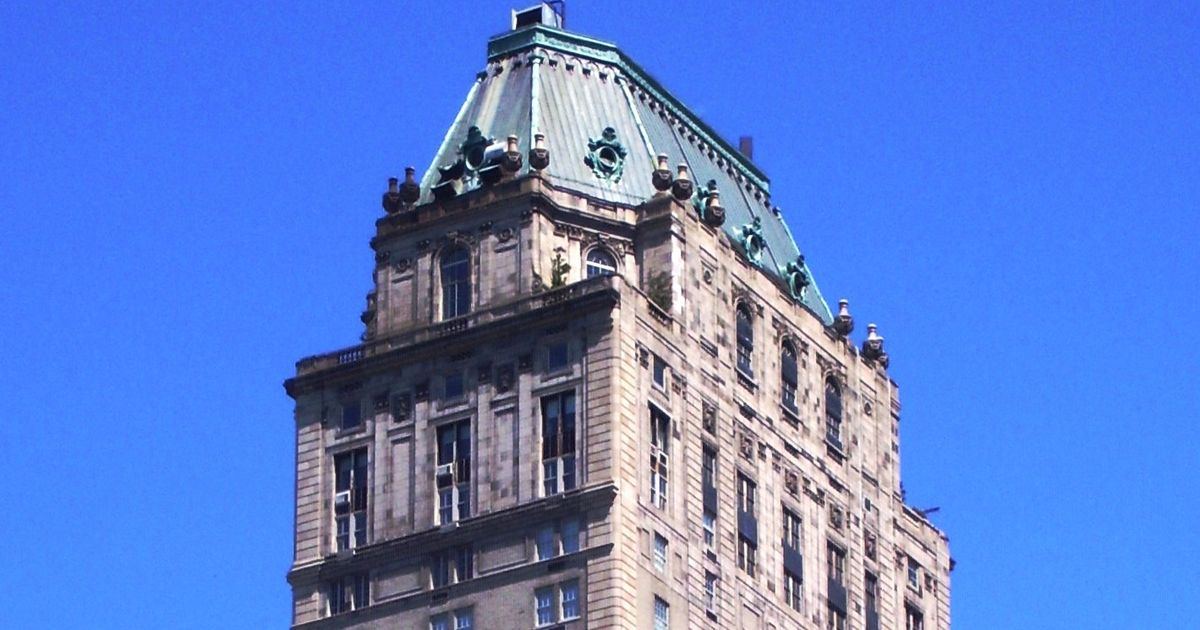
The Pierre Hotel sits at 61st and Fifth Avenue and has, for the better part of a century, been one of those addresses that functions as shorthand for a certain kind of arrival. Art Garfunkel has lived there. Tory Burch has lived there. Howard Lutnick - former Cantor Fitzgerald CEO, current U.S. Commerce Secretary - bought the penthouse for $44 million in 2017, installed plans for a private basketball court in the sky, and by most accounts never actually moved in. The building’s carpets are worn. Its plumbing is corroding. Engineering studies have found that water leaks are penetrating apartments, pipes are old, and fire safety systems are, per the New York Times, “antiquated and potentially dangerous.” This is what $44 million on Fifth Avenue gets you, structurally speaking.
The board explored selling the entire property to the Khashoggi family for $2 billion. After two years of bitter internal fighting, the deal collapsed in September not because shareholders voted it down but because the buyers missed a $100 million deposit deadline. Then missed the extension. Then Motasem Khashoggi told the Times he had the funds but his bank held up the wire transfer, which is the kind of explanation that explains nothing.
None of this directly affects your search for a two-bedroom in Raleigh or a rowhouse in Richmond. But it should.
The Co-op Problem, Explained Through an Extreme Case
A co-op is not a condo. When you buy into a co-op, you are not purchasing real property outright - you are buying shares in a corporation that owns the building, and those shares entitle you to occupy a specific unit. The board of that corporation has enormous power over your life: who can buy in, who can sell, whether the building gets sold out from under you entirely.
The Pierre situation is that last scenario, magnified to absurdity. Shareholders who had spent millions on custom renovations and expected to age in place nearly found themselves forced to sell and leave. The windfall would have been real - most owners stood to net far more than market value - but for residents in their 70s and 80s, money wasn’t the point. The point was that they had no meaningful veto. A large enough coalition of shareholders, led in this case by Lutnick as the building’s biggest owner, could have forced the sale through.
That dynamic exists in co-ops at every price point.
What This Looks Like in Smaller Markets
Co-ops are relatively rare outside New York City - in most smaller American cities, the choice is between condos and single-family homes, and that matters. A condo owner holds a deed. The condo association can assess fees and enforce rules, but it generally cannot force you to sell your unit because it has decided to sell the building to a Saudi investment family.
If you are relocating from New York and you are accustomed to co-op living, be aware that the governance norms you’ve adapted to do not always travel. In cities like Chicago, Washington D.C., and a handful of others, co-ops exist but operate under different state laws with different disclosure requirements and different board powers. What a New York co-op board can do is not what a D.C. co-op board can do.
And if you are moving to a mid-sized city - Chattanooga, Boise, Columbus, Tucson - you will almost certainly be choosing between a condo and a house. The condo association is a lesser beast than a co-op board, but it still has teeth. Read the HOA documents. Actually read them. Find out what percentage of units are owner-occupied versus rented, because a building trending toward rentals is a building trending toward deferred maintenance and governance fights.
The Deferred Maintenance Problem Is Universal
Here is the part of the Pierre story that applies everywhere: the building needs expensive repairs, the shareholders disagree about how to pay for them, and so far nothing has been fixed.
This is not a Fifth Avenue problem. It is a shared-ownership problem. When the cost of a repair is large and the benefit is diffuse - new pipes, a new roof, updated fire systems - collective decision-making slows to a crawl. Every condo association and co-op in America has some version of this fight in its history or its future.
Before you buy into any multi-unit building, request the reserve fund study. This is a document, typically produced by an engineering firm, that estimates the cost of future capital repairs and whether the building is setting aside enough money to cover them. Many buildings are not. A building with a thin reserve fund is a building with a special assessment in its future - meaning the board will one day vote to charge every owner an additional lump sum, sometimes tens of thousands of dollars, to cover what the monthly fees never accumulated.
The Pierre’s shareholders are now back to square one: still in their apartments, still under Taj Hotels management, still staring down corroded pipes and worn carpets, with no clear plan for who pays to fix any of it. Lutnick still owns the penthouse he reportedly uses for entertaining. The Khashoggis, per Motasem’s account, still have the money - it just never quite arrived.
A lawyer for the residents opposing the sale told the Times: “We still don’t know what really happened.”
That is, with some variation in dollar amounts, a sentence you could hear in the lobby of almost any aging co-op in the country.