In this article
Here is a thing that doesn’t appear on any relocation checklist: the previous tenant of your building will haunt it, one way or another, and you might as well decide in advance whether that’s an asset or a liability.
Political consultant Stu Loeser discovered this two years ago when he outgrew his offices in the Chrysler Building - a space he’d chosen partly because no one ever needed directions - and started hunting for something larger, ideally with outdoor space for events. His broker brought him to a top-floor loft at 1239 Broadway, just south of Herald Square. Big, bright, roof access. Good bones from a previous architecture-firm tenant that had sorted out the built-ins and the bookshelves. Then the broker mentioned that some musician had lived there once.
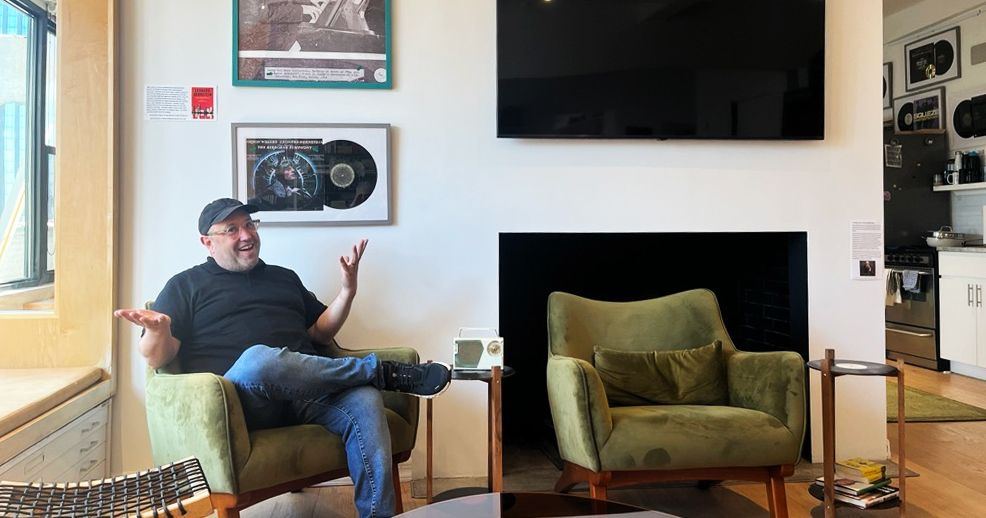
The musician, it turned out, was Leonard Bernstein, in 1945 and 1946. The fireplace was still there. The brick parapets on the terrace were still there, skim-coated but recognizable. A 1946 magazine profile - Bernstein’s first major interview, in Seventeen - described the location as “a stunning penthouse on top of a tall office building in a business section.” That description still more or less fits.
Loeser signed the lease.
What the Previous Tenant Left Behind
This is the part that actually applies to anyone moving somewhere new, whether you’re renting an apartment in a converted textile warehouse in Louisville or taking office space in a century-old building in Providence: the people who came before you did not leave the space neutral.
Sometimes that inheritance is structural - plaster details, wide-plank floors, industrial windows that a 1990s renovation didn’t touch. Sometimes it’s something stranger and more useful. The architecture firm Loeser replaced had, as he put it, “figured out the bookshelves.” You don’t look a gift built-in in the mouth.
The Bernstein connection gave Loeser something rarer: a coherent curatorial theme. Library visits, eBay searches, archive dives - he taught himself exhibition design on the job. The result, spread across the office walls, is the kind of thing that’s genuinely hard to manufacture: a large photograph of Bernstein at the same fireplace, studying a score by composer Marc Blitzstein; below it, a framed LP of the performance Bernstein conducted shortly afterward, with Orson Welles narrating. On the terrace, side-by-side photographs of Bernstein standing at the parapet and the parapet as it looks today. In a niche near the elevator, that Seventeen interview blown up to wall-text scale.
The visual jokes are worth noting, too. The unisex restroom door marks its occupants not with the standard figures but with a shark and a jet - West Side Story iconography for anyone paying attention. Another door reads “Lavatory Bathroom,” with the initials L.B. in all-caps. This is not the décor of someone who hired a branding consultant. It is the décor of someone who found something real and ran with it.
What This Actually Tells You About Relocating
When you’re evaluating a new city - or a new neighborhood within that city - the question of what a building used to be is not nostalgia tourism. It’s information.
A converted warehouse has different bones than a building put up as residential in 1985. A block that was commercial before it was residential probably has wider sidewalks, higher ceilings, and better light. A neighborhood that housed a specific industry - garment, tobacco, printing - will have particular building stock that still shapes how it functions, even decades after the industry left. In cities like Richmond, Virginia, or Winston-Salem, North Carolina, this is not abstract. You can stand in a former cigarette factory and now rent a two-bedroom apartment in it. The ceiling heights alone justify the rent.
Loeser’s situation is the more extreme version: not just a building with an interesting past but a specific room where a specific person lived and worked, where the physical evidence of that occupancy is still present and legible. That is unusual. But the underlying principle isn’t.
The Practical Version of This Advice
When you tour a space - apartment, office, storefront - ask the landlord or broker what the previous tenant did there. Not because you’re going to frame their LP covers, but because the answer tells you something about the building’s actual character. An architecture firm leaves good built-ins. A restaurant leaves ventilation. A law office leaves carpet you’ll spend money removing.
The buildings in smaller American cities tend to carry more of this legible history than the ones in the largest markets, where renovations come fast and thick and the previous tenant is sometimes scrubbed out before you can learn their name. In a city where the inventory turns over more slowly, the room you’re renting may still have something to say about the people who shaped it.
Whether you listen is up to you. But in 80 years, someone standing at your fireplace may be glad that you paid attention.